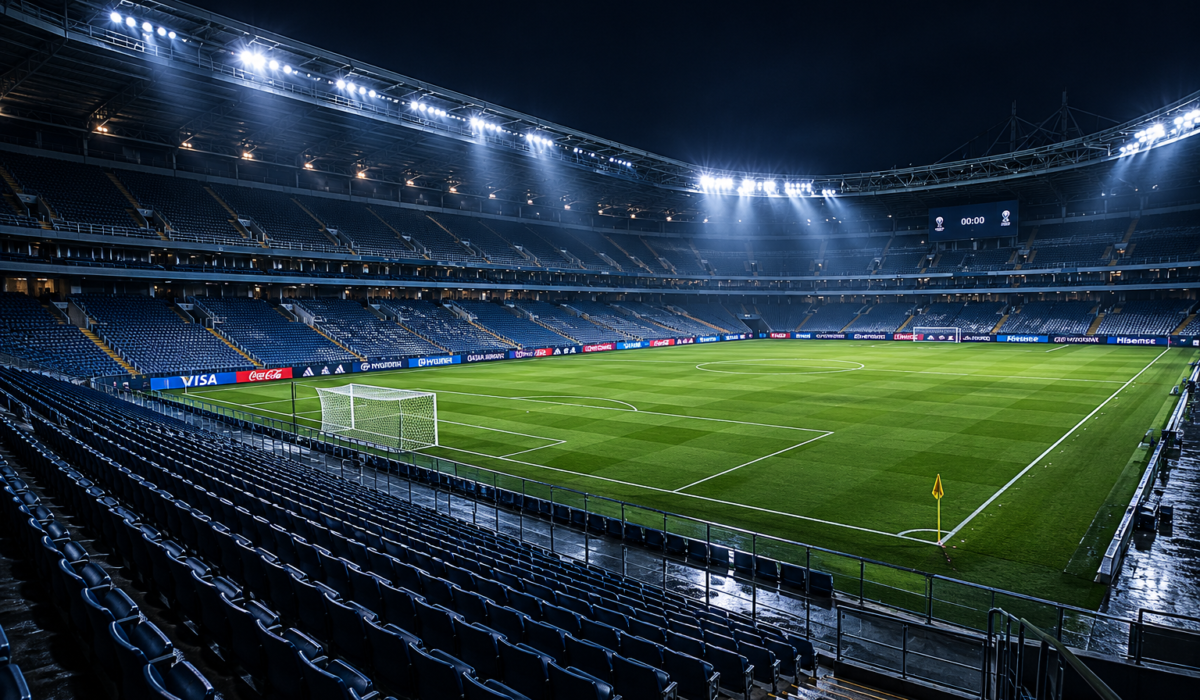
The 2026 FIFA World Cup kicks off on June 11. The biggest sporting event in human history. 48 teams. Three host nations. And somehow, with weeks to go, the football is the least interesting thing about it.
Let’s be precise about what FIFA promised when it awarded the 2026 World Cup to the United States, Canada, and Mexico. They called it a “Unity Bid.” A tournament that would showcase the harmonious relationship between three great North American nations. A festival open to the world. A celebration of the beautiful game for the people who love it most — the fans.
Every single one of those promises has been broken. Not quietly, not accidentally, but loudly and systematically — in the way that only an organisation with decades of practice at looking the other way can manage.
They Said It Would Be Accessible. It Is Not.
Start with the most basic promise any sporting event makes to its audience: that people can actually attend. FIFA has failed this test so comprehensively that it borders on parody.
Fans across all three host countries have been in open revolt over ticket prices that have made the world’s most popular sporting event inaccessible to the very people who built its popularity. When the cost of a match eclipses what many working families earn in a month, you are no longer hosting a football tournament. You are hosting a corporate hospitality event with football as the entertainment.
The response from FIFA President Gianni Infantino has been characteristic of an organisation that has mastered the art of saying nothing while appearing to say something. Infantino — the same man who presented Donald Trump with a “FIFA Peace Prize” in December 2025 — has framed every criticism as an attack on football itself rather than an indictment of his organisation’s choices.
When the cost of a group stage match eclipses a working family’s monthly wage, you are no longer hosting a football tournament. You are hosting a corporate event with football as the entertainment.
The “Unity Bid” That Divided Everyone
The political chaos surrounding this tournament would be extraordinary if it weren’t so predictable. FIFA awarded a tournament to three nations whose relationship has been defined, in the years since the bid was won, by trade wars, tariff threats, and the kind of diplomatic friction that makes “Unity Bid” read like a particularly cruel joke.
Donald Trump has threatened to move games out of cities he considers politically hostile. European nations seriously discussed boycotting the tournament after Trump’s posturing over Greenland. Iran — a qualified participant — has faced the surreal situation of being told by the host nation’s president that their players’ safety could not be guaranteed on US soil.
FIFA’s response to the Iran situation has been a diplomatic pantomime of the highest order. Infantino confirmed Iran would participate. Trump confirmed Iran would participate. Iran’s own government said the final decision rested with the National Security Council. At no point did anyone in a position of authority at FIFA appear to ask the most obvious question: how did we end up here?
Mexico City: The City That Pays While FIFA Profits
While the geopolitical drama dominated headlines, something quieter and more insidious was happening in Mexico City. The World Cup effect on housing arrived early and hit hard.
Rents in Mexico City rose between 12 and 15 percent through 2025. More than 20,000 families were displaced annually as housing became unaffordable. Protesters took to the streets with banners reading “Your World Cup Is Our Dispossession.” Reports emerged that FIFA cancelled roughly 40 percent of hotel reservations in the city without public explanation or compensation.
New Jersey vs. “New York”: A Small Dispute That Reveals Everything
In the United States, a seemingly minor branding dispute has exposed the contempt with which FIFA treats its host partners. Officials in New Jersey — where the final will be played at MetLife Stadium — objected to FIFA’s marketing of the tournament as “the World Cup in New York.”
Local representatives claim approximately $26 million in financial contributions from New Jersey are being erased from the narrative while the state bears the logistical burden of hosting the most-watched match in football history.
It is a small thing. It is also a perfect encapsulation of how FIFA operates: take the money, take the infrastructure, take the credit — and leave the communities to deal with the consequences.
What FIFA Has Learned From Qatar
The honest answer is nothing. After the 2022 World Cup in Qatar — a tournament awarded amid allegations of corruption and hosted by a nation where migrant workers died building the infrastructure — FIFA promised reform, transparency, and a new era of responsible hosting decisions.
What followed was the awarding of the 2034 World Cup to Saudi Arabia, a country whose human rights record makes Qatar look progressive. And in between, the organisation of a 2026 tournament that has managed to combine the worst elements of political dysfunction, economic exclusion, and institutional arrogance into a single event.
The Verdict
None of this will stop the tournament from happening. The games will kick off on June 11. Goals will be scored. Stars will shine. The cameras will find the moments of joy and beauty that football always produces, and those moments will be broadcast to billions, and FIFA will point to them as vindication.
But the story of the 2026 World Cup was written long before a ball was kicked. It was written in the boardrooms where ticket prices were set, in the diplomatic meetings where Iran’s safety was treated as a negotiating chip, in the housing offices of Mexico City where families were told to move, and in the corridors of FIFA headquarters where an organisation with a decades-long corruption problem decided that the answer was better PR rather than genuine reform.
